
How BC’s Solar Net Metering Actually Pays You Back (What We Learned on Our Homestead)
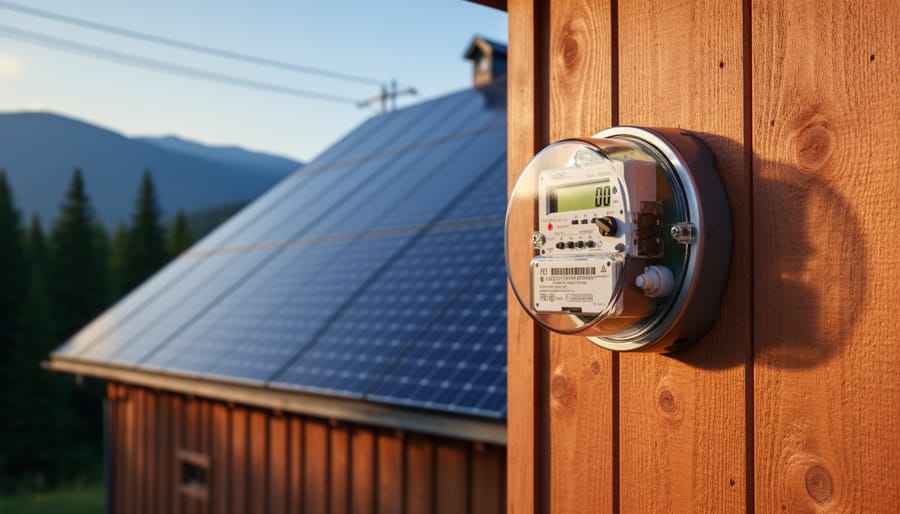
Understand your net metering rate before signing any solar installation contract. In British Columbia, homeowners with solar panels receive compensation through net metering programs, but the actual rate you’ll get for excess electricity varies significantly depending on your utility provider and consumption patterns.
Check your specific utility’s compensation structure immediately. BC Hydro pays the retail rate for electricity you consume offset by solar generation during the same billing period, but excess generation beyond your consumption gets credited at a much lower rate—typically around 9.99 cents per kilowatt-hour compared to the retail rate of 12-15 cents you pay for grid power. FortisBC operates similarly, though their specific rates differ by service area.
Calculate your break-even timeline using actual compensation rates, not theoretical savings. Many homeowners discover their solar investment takes 15-25 years to pay off when accounting for the lower rate paid for excess generation, especially if their system produces more than they consume during peak production months.
Request detailed annual consumption data from your utility spanning at least two years. This reveals your actual usage patterns and helps size your system appropriately—oversizing means more excess power sold at lower rates, while right-sizing maximizes the higher-value consumption offset. The difference between these approaches can mean thousands of dollars over your system’s lifetime, making this initial research absolutely essential for any homestead considering solar installation.
What Net Metering Really Means for Your BC Homestead
The Battery You Don’t Have to Buy
Here’s something that surprised me when I first installed solar panels on our homestead: I didn’t need to buy expensive batteries at all. The electrical grid itself became my battery bank, storing energy for me whenever I produced more than I used.
Think of it like this – you know how we homesteaders preserve excess garden produce in summer to enjoy during winter? Net metering works similarly, except it happens daily instead of seasonally. During sunny daylight hours, your solar panels typically generate more electricity than you’re using. That excess power flows back into the grid, spinning your meter backwards (or banking credits on a digital meter). Then, when evening comes and you’re cooking dinner while your panels sit idle, you draw that banked energy back from the grid.
It’s a beautiful daily rhythm. Morning coffee brewing uses grid power. Mid-morning through late afternoon, your panels take over and send surplus back. Evening and overnight, you’re drawing down those credits. No bulky battery system to maintain, replace, or worry about during power outages (though that’s a separate consideration).
This arrangement means you’re essentially getting free energy storage without the hefty upfront cost of physical batteries, which can run $10,000 or more for a typical homestead system.
How BC Hydro Tracks Your Energy Balance
When I first installed solar panels on our homestead, I was curious how BC Hydro would actually track all that energy flowing back and forth. Turns out, it’s simpler than you might think.
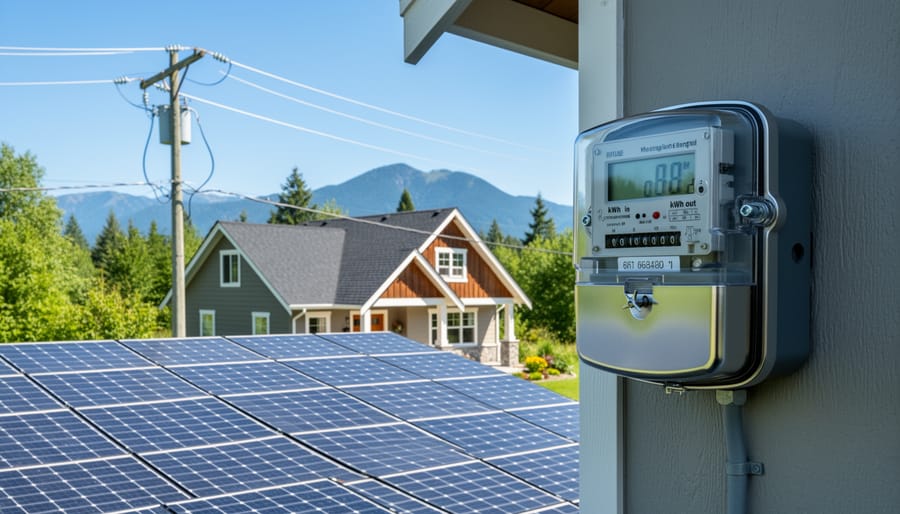
BC Hydro replaces your old analog meter with a bi-directional smart meter that automatically tracks energy in both directions. Think of it like a two-way street counter: it records electricity you draw from the grid and electricity your panels send back. No extra devices or monitoring systems needed on your end.
Your billing cycle works on a straightforward annual schedule. Each month, BC Hydro calculates whether you’re a net consumer or producer. During sunny summer months, you’ll likely generate excess power that creates credits on your account. Those credits roll forward month to month, helping offset your energy costs during darker winter periods when your panels produce less.
Here’s the practical part: BC Hydro reconciles everything once per year, typically in March. If you’ve accumulated credits throughout the year, they apply them to your outstanding balance first. Any remaining credits are paid out to you at the net metering rate, which we’ll discuss in detail shortly.
The system runs automatically through their smart meter infrastructure, so you don’t need to submit readings or track anything manually. Your online account shows your energy balance clearly, making it easy to monitor your homestead’s energy independence journey.
Breaking Down BC’s Net Metering Compensation Rates
What You’ll Actually Get Paid Per Kilowatt-Hour
Here’s the reality check I wish someone had given me before I started running the numbers on my solar setup: BC Hydro’s net metering program doesn’t pay you cash for your excess electricity. Instead, you earn credits at the same rate you pay for power, which currently sits around 9-12 cents per kilowatt-hour for most residential customers on the two-tier rate structure.
Let me break this down with a real example. Say you’re paying 9.57 cents per kWh for your first 1,376 kWh each billing period (that’s Tier 1), and 14.32 cents per kWh after that (Tier 2). When your solar panels produce more electricity than you’re using, those excess kilowatt-hours roll onto your account as credits valued at whatever rate you would have paid.
This one-to-one credit system is actually pretty fair compared to some jurisdictions where utilities buy back power at wholesale rates, sometimes as low as 2-3 cents per kWh. In BC, if you’d normally pay 14 cents for a kilowatt-hour, that’s exactly what your excess generation is worth as a credit.
The catch? These credits expire after 12 months if unused, and at the end of your annual reconciliation period, BC Hydro doesn’t cut you a check for leftover credits. They simply zero out your account. This means strategic energy use matters tremendously. You’re essentially banking summer sunshine to offset winter heating bills, which works beautifully for most homesteaders running greenhouses, workshops, and seasonal equipment throughout the year.

Annual Credit Cycles and Payouts
Here’s something I learned during my first year with solar panels: BC Hydro’s net metering program runs on an annual cycle that ends every March 31st. Think of it as your solar anniversary date. Throughout the year, you’re building up credits during those glorious summer months when your panels are cranking out more power than you can use, then drawing down those credits during darker winter days when you need the grid’s help.
When March 31st rolls around, BC Hydro settles your account. Any surplus credits you’ve accumulated get paid out, but here’s the catch that surprised me initially: you receive payment at a much lower rate than what you earned generating those credits. The payout rate typically hovers around 9.99 cents per kWh, which is considerably less than the retail rate you saved during the year.
This annual reconciliation means strategic thinking pays off. I’ve learned to size my system to minimize excess generation rather than dramatically overshooting my needs. Those seasonal variations matter too. My August production might cover three times my usage, while December barely scratches the surface. The beauty of net metering is that summer abundance carries you through winter scarcity, making year-round sustainability genuinely achievable for homesteaders like us.
Regional Differences Across BC
Here’s something I learned the hard way when planning my solar setup: not everyone in BC gets the same deal. Your compensation rates depend entirely on which utility company serves your property, and this matters tremendously if you’re considering going solar on your homestead.
BC Hydro serves most of the province and offers their standard net metering program with rates tied to their residential electricity tiers. If you’re in the Interior, Kootenays, or parts of the Lower Mainland though, you might be under FortisBC’s jurisdiction. Their net metering rates can differ slightly, so you’ll want to check their specific rate schedules. The differences aren’t huge, but when you’re calculating payback periods over 20-25 years, every cent counts.
For those of you on smaller municipal utilities like Nelson Hydro or the City of New Westminster, your experience might vary even more. Some municipal utilities have their own net metering programs with unique terms and compensation structures. Before investing thousands in panels, make a quick call to your utility provider. Ask specifically about their net metering rates and annual reconciliation policies. This five-minute conversation could save you from unwelcome surprises down the road.
The Real Math: Will Solar Pay Off on Your Property?
Our Farmhouse Energy Profile (And Probably Yours Too)
Let me be real with you about our 1912 farmhouse: it’s charming, but it’s an energy guzzler. Our monthly electricity usage ranges wildly depending on the season. Winter months average around 1,200 kWh as we supplement our wood heat with electric baseboards in the bedrooms and bathrooms. Summer? We drop to about 600 kWh when we’re not heating anything and relying on fans instead of air conditioning.
We’ve got a decent south-facing barn roof that could hold about 20 solar panels, which would generate roughly 6,000 kWh annually in our part of the Fraser Valley. Here’s where the math gets interesting. During those sunny June and July months, we could potentially generate 700-800 kWh while only using 600 kWh. That surplus of 100-200 kWh per month would earn us credits at the net metering rate.
But December through February? We’d be pulling heavily from the grid while our panels produce maybe 200 kWh in those short, grey days. The beauty of net metering is that our summer surplus helps offset winter purchases. Based on our calculations, we’d probably generate about 15-20 percent surplus annually, which translates to real savings when those credits roll over throughout the year.
Running the Numbers: Installation Costs vs. Compensation
Let me be straight with you about the money side of going solar on your homestead. When my neighbor installed his 5kW system last year, I watched the whole process unfold, and the numbers were eye-opening.
A typical residential solar installation in British Columbia runs between $12,000 and $18,000 for a 5kW system after available rebates. That might sound steep, but here’s where it gets interesting. With BC Hydro’s current net metering rates crediting you at the retail rate (around 12-14 cents per kWh depending on your tier), a well-positioned system can generate roughly $600-900 annually in credits.
Let’s work through a real example. Say you invest $15,000 in a 5.5kW system on your south-facing barn roof. In the sunny Okanagan, that system might produce 6,500 kWh yearly. If you’re using 4,000 kWh yourself and sending 2,500 kWh back to the grid, you’re looking at about $500 in self-consumption savings plus $325 in annual credits.
The honest payback period? Typically 15-20 years without additional incentives. That’s longer than some online calculators suggest, but remember three things: electricity rates historically increase 2-3 percent annually, panel warranties last 25 years, and you’re building energy independence that has value beyond dollars.
The federal Greener Homes Grant can knock $5,000 off upfront costs, dramatically improving your timeline. Some homesteaders I know factored in the peace of mind during power outages and the environmental impact, which made the investment worthwhile regardless of strict payback calculations.
Maximizing Your Net Metering Returns: What Actually Works
Right-Sizing Your Solar Array
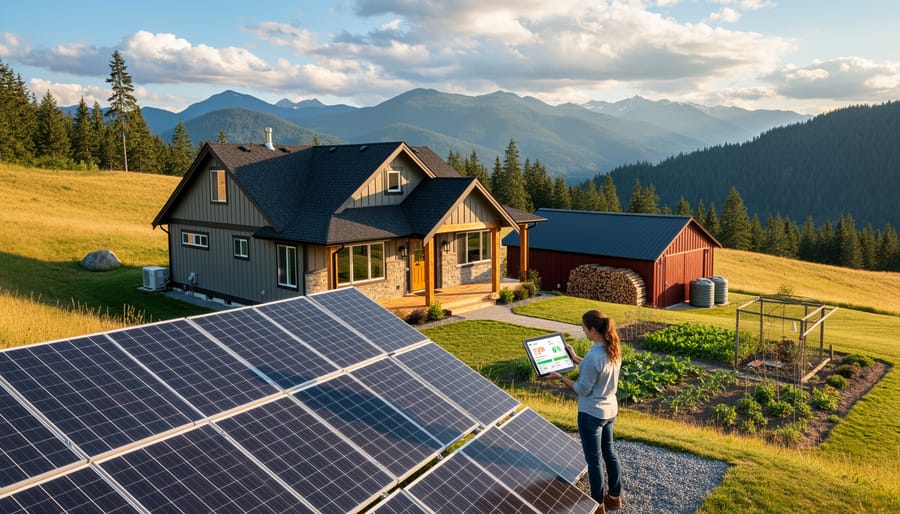
Here’s my hard-won advice: size your solar array to match about 90-100% of your annual consumption, not more. I learned this lesson when my neighbor over-built his system, thinking bigger was better. He generates 30% more power than he uses annually, and those excess credits? They’re compensated at a fraction of retail rates when they’re settled each year.
The sweet spot lies in careful calculation. Track your yearly consumption through your BC Hydro account, then design your array accordingly. Remember, you’ll still benefit from net metering during sunny summer months when you’re banking credits at full retail rates, which you’ll use during darker winter days. That’s the beautiful part of the system.
Consider your future needs too. Planning to add an electric vehicle or workshop? Build that into your calculations now, as expanding later costs more. But resist the temptation to dramatically over-build thinking you’ll make money from surplus generation. BC’s net metering program isn’t designed as a profit center; it’s meant to offset your consumption.
Think of it like growing your own vegetables. You plant enough tomatoes for your family’s needs, maybe a bit extra for preserving. You don’t plant an entire field hoping to get rich selling the surplus. Same principle applies here.
Shifting Your Homestead Energy Use
Here’s where things get exciting – and where you can really make your solar investment work harder for you! When I first installed our panels, I didn’t think much about timing my chores. I’d run the dehydrator at night, charge power tools whenever, and fill water troughs on my morning schedule. Then I looked at my net metering statement and realized I was basically running a charity for BC Hydro.
The secret to aligning with your sustainable living goals is simple: use electricity when your panels are producing it. Think of those peak sunshine hours between 10 AM and 3 PM as your “free power window.” That’s when I now schedule all my energy-intensive activities.
I shifted running well pumps to midday instead of early morning. My dehydrator hums away preserving tomatoes while the sun blazes overhead. I charge all cordless tools, run the washing machine, and process garden harvests during peak production hours. Even batch cooking happens on sunny afternoons now.
The difference? I went from sending 60% of my generated power to the grid at those disappointing net metering rates to using about 75% myself. That’s real money staying in my pocket instead of disappearing into BC Hydro’s system at nine cents per kilowatt-hour.
Start by identifying your biggest power consumers, then simply shift their operation to match your solar production. It’s not complicated – just intentional.
Getting Started: The Application Process Demystified
I’ll be honest – when I first decided to explore solar for our homestead, the application process felt intimidating. But here’s the good news: applying for BC’s net metering program is actually more straightforward than you might think, and I’m going to walk you through it.
First things first, contact your utility provider. In BC, this is typically BC Hydro or FortisBC, depending on your location. They’ll provide you with the official Net Metering Interconnection Agreement form. Think of this as your golden ticket – it’s the document that officially allows you to send excess power back to the grid.
You’ll need to gather some documentation: proof of property ownership, your electrical permit (which your solar installer will help arrange), and details about your proposed system size and specifications. Don’t worry if this sounds technical – your solar installer should handle most of the heavy lifting here. That’s what you’re paying them for!
The timeline typically runs 4-8 weeks from application submission to approval, though I’ve heard stories of both faster and slower processing times. One common pitfall? Incomplete applications. Double-check everything before submitting to avoid delays.
Here’s a tip that saved me headaches: schedule a pre-inspection consultation with your utility. Many companies offer this free service, and it helps catch potential issues before you’ve invested thousands in equipment. Another mistake I see folks make is forgetting about municipal building permits – you’ll need those too, separate from your utility approval.
The process might seem like paperwork overload initially, but remember: thousands of BC homesteaders have successfully navigated this path. You’re joining a growing community of energy-independent homeowners, and that’s pretty exciting.
So, what did our homesteading couple decide? After crunching the numbers and understanding BC’s net metering rates, they moved forward with solar—but with realistic expectations. They recognized that the compensation wouldn’t deliver quick riches or even break-even returns based solely on excess energy credits. Instead, they viewed solar as part of their broader self-sufficiency strategy, alongside their garden, rainwater collection, and preservation efforts.
The beauty of net metering in BC isn’t about getting wealthy from surplus power. It’s about making solar financially viable enough to justify the investment when combined with direct consumption savings and the long-term value of energy independence. For homesteaders committed to country living, that equation often makes perfect sense.
My advice? Run your own calculations using your actual energy consumption patterns and local installation costs. Consider solar not as a profit center but as infrastructure that supports sustainable living. Embracing renewable energy on your homestead means playing the long game—building resilience one panel, one season, one kilowatt-hour at a time. The numbers might be modest, but the independence is priceless.